Posts

Birding & Being: Gateway to the Natural World

Image
Faraaz Abdool leads us on a journey of reconnection; and encourages us to find joy, beauty and commonality in nature. Birding, he advocates, is an easy entry to nature, and to “being.” To wrangle the disciplines of ecology and philosophy and neatly package seemingly diverse teachings and guidelines seems improbable and ambitious with lofty, unattainable aspirations. Let us not overthink it as we set out on this journey of being. Let us not think about it at all. Before we can explore the concept of being, let’s consider why we should cast attention toward birds. Of all the nature-based activities on offer, what makes birds so special; why is the reader being coerced into birding? For starters, it is extremely likely that you have noticed a bird before. Familiarity, check. They are literally everywhere: every habitat in almost every continent. They are probably the most noticeable creatures of the natural world, infiltrating even the most urbanized areas. We have national birds ...

Ocean acidification, another climate issue

Image
When you make changes in a self-regulating system, everything else changes. Dr Anjani Ganase wonders about how we are intensifying the acidic ocean.     Chemistry behind ocean acidification   Our ocean absorbs about 40 % of carbon dioxide pumped into the atmosphere. When carbon dioxide dissolves into the ocean it reacts with the water releasing hydrogen ions to form carbonic acid making the ocean acidic. Having more carbon dioxide in the water means that the ocean becomes more acidic as carbon emissions increase. Ocean acidification limits the availability of carbonate ions for the formation of calcium carbonate shells and skeletons (think of clams, crabs, conchs, lobster).   Shells eventually break down to form sand. Shells collected at Pigeon Point. Photo by Anjani Ganase   The ocean, the largest body of water on the planet, has absorbed over 525 billion tonnes of carbon dioxide since the industrial revolution. Under more aci...

Migrations by Air, Land and Sea

Image
Creatures other than man migrate along constant pathways to preserve their species. Dr Anjani Ganase considers some of these corridors of power and how they should be protected, especially in the region most important to our islands, the Caribbean Sea.    Animal migration is the seasonal movement from one habitat to another for the purpose of activities such as breeding and feeding. Migrations can be over small distances, from mountains to meadows; along latitudinal lines; and some circumnavigate the planet.   Many different animals migrate: insects, birds and bats fly, zooplankton moves on ocean currents; and great herds on foot. Here are some quirky facts about animals that travel great distances in air, sea or over land.    Leatherback turtles nest on beaches of Trinidad and Tobago and migrate long distances in the ocean following food. BY AIR The longest non-stop bird migration recorded was the bar-tailed godwit travelling across the...

Floods and Droughts: two sides of the same coin

Image
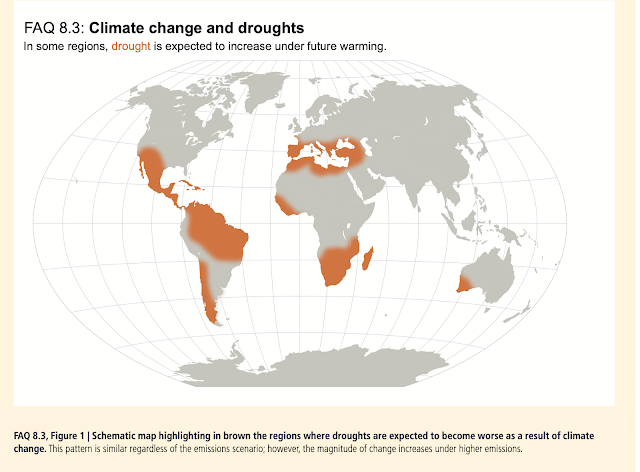
Dr Anjani Ganase considers how Earth’s water cycles are changing, affected by global warming.   Currently parts of the world appear to be experiencing a series of severe droughts, while other areas are the suffering from severe floods. Over the last weeks, Pakistan received nearly three times the average monsoonal rain of the past years, wiping away towns and villages resulting in over 1000 deaths and displacing over 33 million people. Meanwhile Sudan has experienced torrential downpours that destroyed 9600 homes and damaged 22,000 more with 79 dead. USA flash flooding in Texas, New Mexico has seen record amounts of rainfall in just 24 hours.      Areas at risk of drought as a result of climate change (image courtesy IPCC AR6).   At the same time, most of Europe has been under severe drought conditions with water reserves low enough to unbury the past. World War II ships full of explosives dumped by the Nazis in the Danube River have r...

Are "blue jeans" bluer in Tobago?

Image
Faraaz Abdool looks at birds on Tobago and on Trinidad, and comments on the amazing diversity that distinguishes Tobagonians from Trinidadians! All photos by Faraaz Abdool   Our two islands, Trinidad and Tobago, boast an astonishing tally of bird species recorded over the course of recent ornithological history. For such small land area, TT’s species count of 492 catapults our tiny nation to the second highest global ranking in terms of species density. The expansion of scientific knowledge and understanding has direct repercussions on this total; more information on bird genetics leads to some species being split and others being lumped together. More often than not, it is the former that plays out as we learn more about the lives of our feathered friends.   The stellar example is the bird that adorns the $5 note – formerly known as the Blue-crowned Motmot, it was a bird found on both islands as well as across southern Central and northern South America. Studies revea...

An Exploration of Tobago Beaches

Image
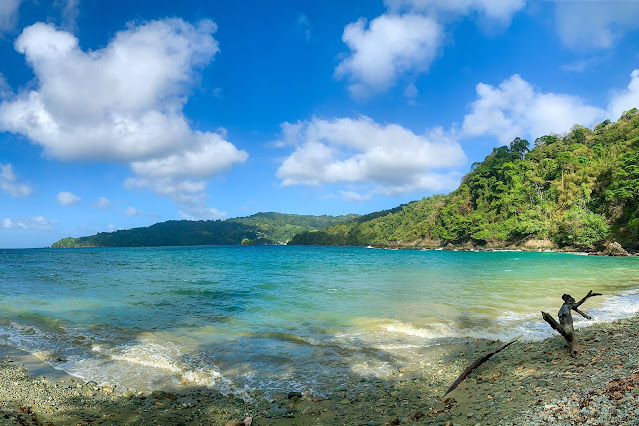
Joanne Husain shares some unheralded Tobago beaches, just off the main roads and safe for exploration. All photos by Joanne Husain   Tobago’s coastline may not be vast, but it is scalloped with no shortage of beautiful beaches. Sands range from sugar-white to golden to volcanic black. Alluring turquoise waters are never out of reach. Generally speaking, beaches in the southwest are subject to heavier traffic than those in the northeast. While some beaches have facilities, the majority remain authentic and untamed. Every beach has its distinctive charm and holds a special value. Here are three picks from the Caribbean side of the island:   The panoramic view of the greater Man O War Bay from Hermitage Bay. Photo by Joanne Husain Stonehaven Bay   Along a stretch of south Tobago’s Caribbean coastline - between Mt. Irvine and Black Rock - lies the very accessible and picturesque Stonehaven Bay, also called Grafton Beach. Getting to Stonehaven Bay is simple: there ...