Posts

Showing posts with the label biodiversity

Dwindling Global Biodiversity
Image
Dr Anjani Ganase surveys what the world is losing through human activities, and makes an appeal for living within our means in the natural world.   On May 22, we observe the International Day for Biological Diversity. Biodiversity denotes the variety of living organisms that make up the natural world around us. The world as we know it is the culmination of evolution over billions of years, the result of the slowly ever-changing global environment. Organisms evolve and co-evolve with each other and the environment. The biodiversity of ecosystems is the result of balance between competition for resources and external disturbance events that create opportunities for new life. The diversity of habitats and organisms not only sustain biodiversity but is essential to our survival. Plant stocks don’t just supply the fruits and vegetables we eat today but provide the genetic stock for future supplies in a changing climate. The terrestrial and marine habitats provide ...

Transitioning to Renewables

Image
  Dr Anjani Ganase considers the lessons learned from fossil fuels as we shift to renewables, and urges a shift from continuous growth to an ideal of wellbeing.   COP26 called for rapid transitions over the next decade to keep global temperature rise below 1.5 C for the benefit of humankind. But the need to transition our energy sources away from fossil fuels to renewable alternatives in the face of climate change brings different risks. And unless the lessons learnt from the rampant expansion and exploitations of the fossil fuels industry are not applied (through regulations) to the development of the renewable industry, we will continue to experience significant losses in biodiversity through habitat loss and degradation. Scientists have estimated that the Anthropocene – era of humankind - has produced the sixth mass extinction with a range of 150,000 – 260,000 species lost over the last 500 years which is about 100 - 1000 times higher than backgroun...

What Diversification must look like

Image
Not just a conversation piece to distract us, the topic of diversification is real in Dr Anjani Ganase’s mind. Here’s what we should be doing to ensure that we can protect land and marine resources and communities.     The main purpose of diversifying our economic resources is to be able to withstand the shocks of external disturbances. Since the Government of Trinidad and Tobago first started talking about the need to diversify our economy the threat of climate change seemed more like a future retirement plan. Today, climate change is on the doorstep, the world is committed to leaving fossil fuels behind and Covid has thrown us a curve ball.   But diversifying isn’t simply trying to get profit from elsewhere, more holistically it is to build a system of socio-economic resilience, and this doesn’t mean gaining profits for something but making sure we’re also not losing it somewhere else. For small island developing states, the impact of climate change...

Personal Choices protect Island Biodiversity

Image
Can you live without eating beef? What about that semi-stray cat that gets your table scraps?   Faraaz Abdool, author of Casual Birding in Trinidad & Tobago, discusses some personal choices that, taken collectively, can make a difference to the island’s biodiversity. All photos by Faraaz Abdool                       Isn't she cute? Isn't she lovely? Don't be deceived, these lovable pets can be lethal in your backyard! Convenience in the short term can have damaging impacts in the long term. As consumers, we hold the ultimate power in the chain of supply and demand. The consumer decides what is worthy of investment and what’s not. Corporations may seem untouchable in their endless pursuit of profit, but we can shift our attention to local entrepreneurs when we are making our purchases. We have the responsibility of knowing where our food comes from, and this includes all fruits, vegetables, snacks, grains, ev...

BUCCOO IN THE TIME OF CLIMATE CHANGE

Image
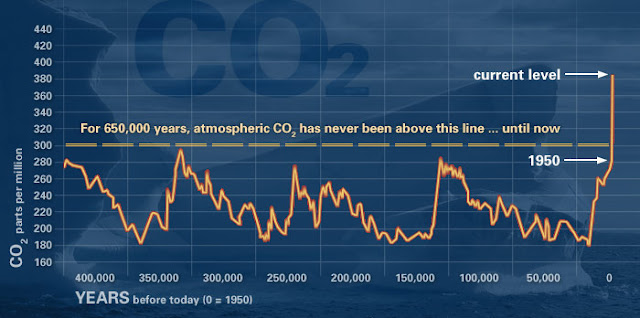
How will climate change impact Trinidad and Tobago? What will sea level rise mean for settlements on coastal fringes, including Trinidad’s Port of Spain and Tobago’s bayside communities? Dr Anjani Ganase, marine scientist, spells out predictions of the IPCC (Intergovernmental Panel on Climate Change) Special Report 1.5, and makes an urgent call to action.   Since the beginning of the industrial era (1880-1900), just over a hundred years ago, humans have put enough carbon dioxide into the atmosphere to raise the global temperature by nearly one degree Celsius. This is rapid accelerated warming; before that, historical changes in the planet’s temperature occurred over several hundred-thousands of years. Even then it was associated with mass extinction events. Today, the global community is treading a dangerous path, almost past the point of no return. Our future will be hotter and more extreme; temperatures will continue to rise because of what we’ve already pumped into the atm...

The Beetles of the Main Ridge Reserve

Image
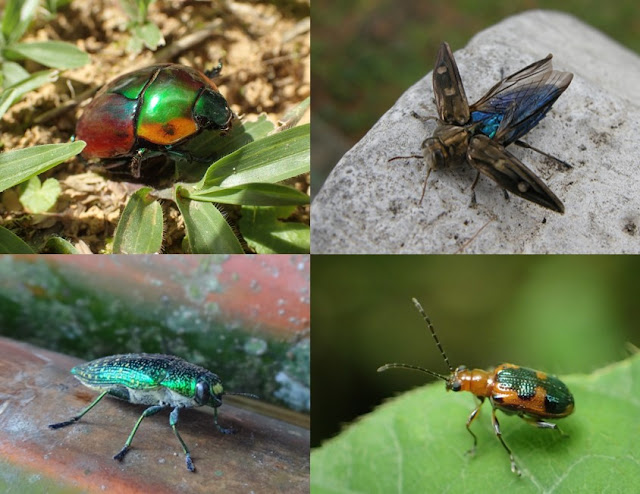
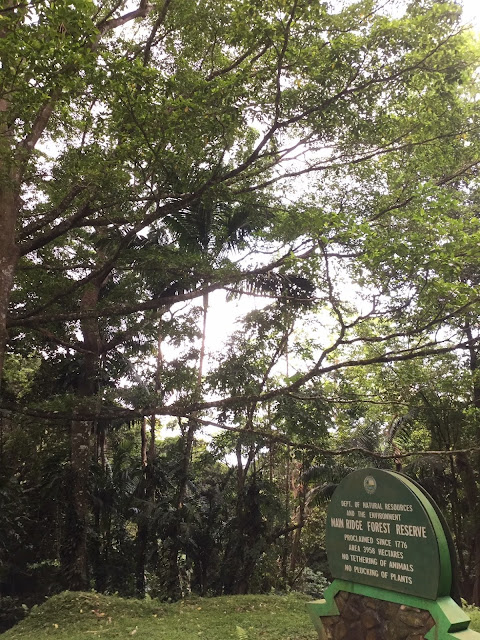
This week, Dr Amy Deacon, Lecturer in the Department of Life Sciences at The University of the West Indies, St Augustine and Secretary of the Trinidad and Tobago Field Naturalists’ Club continues her series on the biodiversity of the Main Ridge Reserve (MRR). Today, she teams up with UWI Entomologist Raj Mahabir to introduce us to the beetles of the MRR. When you think about the biodiversity of the main Ridge Forest Reserve, which creature springs to mind? The sabrewing hummingbird? The blue-backed manakin? The agouti? It is probably safe to bet that you are not imagining a dung beetle. Today, we are here to convince you that these smaller inhabitants of the MRR are just as important and interesting as the more familiar animals associated with Tobago’s forests. Almost a third of all insects are beetles – more than 300,000 species worldwide. They are distinguished by their hard outer wings, which protect the delicate flight wings underneath. At least 700 species are found in Tob...

Some of us are missing!

Image
Do you miss the corals that are no longer on Buccoo Reef? No, but you would miss mangoes in season if there were no pollinators. In this International Year of the Reef, more corals are likely to disappear as the earth warms. Dr Anjani Ganase, marine ecologist, reminds us of other creatures endangered or already lost; and asks us to pay attention to the accelerating decline in biological diversity because of the ways that humans have changed the environment.  May 18 was World Endangered Species Day; and May 22 International Day for Biological Diversity. The reality is, as we lose more endangered species, the result is the decline of biodiversity. It is estimated that since 1970 (International Union for Conservation of Nature, IUCN), global vertebrate populations have declined by at least 30 %. Scientists warn that continued decline will result in extinctions, even potentially the sixth mass global extinction event. Humans have significantly accelerated the extinction rates of ...