Posts

Showing posts with the label T&T Marine Mammal Stranding Network

Talking with Dolphins
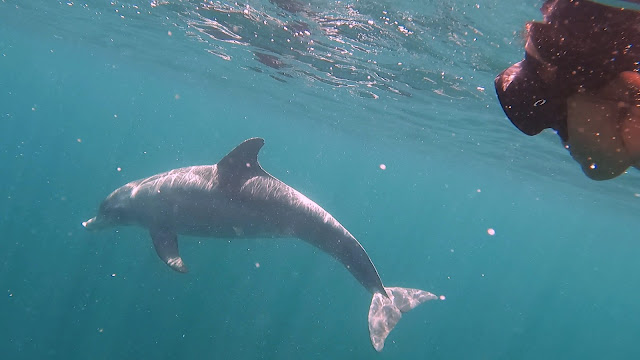
Image
Are dolphins as curious about us as we are about them? Dr Anjani Ganase talks with linguist/ bio-acoustician, Syam Nath of the TT Cetacean Sighting Network after a joyful encounter Rough-tooth dolphins off Rocky Point Tobago. Photo courtesy Anjani Ganase The morning started like any other. The boat was loaded by 8 AM at Gibson Jetty, we motored slowly through the Bon Accord Lagoon and exited the reef through its northern channel. As we exited the reef, we were met by a pod of curious dolphins. Turns out they were a group of 10 - 12 rough-tooth dolphins ( Steno bredanensis ) cruising the area. The boat driver did not deviate course, however, maintaining a steady speed. As we made our way to Mt Irvine, the dolphins approached the boat to bow ride. I can spend thousands of hours at sea and my response to dolphins is always the same: exhilarated joy. As we arrived at our dive destination at Mt Irvine, the boat slowed and the pod moved on, or so we thought. After an hour diving, we surfaced...

Whales Ashore!

Image
Whale strandings are mysteries whenever they occur, and impossible to predict. Marine ecologist Dr Anjani Ganase considers some recent theories about whales’ navigational systems using the earth’s geomagnetic field and the sun. Human-driven changes are also causes. Over the last month, four melon headed whales stranded themselves on Moruga Beach, and later on there was a single stranding on Maracas Beach. Last year there was a single stranding of a pregnant melon headed whale in Princes Bay, Tobago. These strandings of melon headed whales in several locations around Trinidad and Tobago begs the question of what is the cause of these strandings in recent months. Necropsy – after death analysis - by the UWI School of Veterinary Medicine revealed parasitic infection in one examination of the whale carcasses. Melon headed whales are deep water toothed whales that can be found in tropical waters worldwide, down to 6000 feet depth and far from coastal areas. They usually occur in large ...