Posts

Showing posts with the label Trinidad Carnival

Carnivals of the Sea

Image
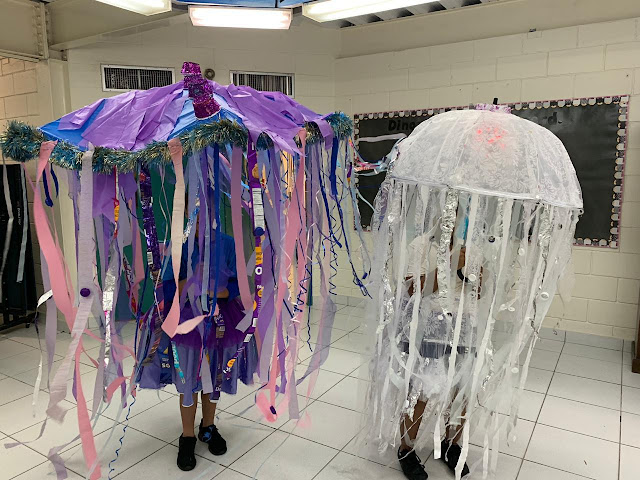
From time to time, bandleaders have been inspired by and chosen to represent themes of the sea. Irving “Mac” McWilliams who was a fisherman at Las Cuevas created Wonders of Buccoo Reef to win the Band of the Year title in 1971. Peter Minshall’s Carnival of the Sea was the Band of the Year in 1979. Individual portrayals have dramatised sea creatures as giant, fearsome, awe-inspiring. Anjani Ganase, marine biologist, comments on some spectacular sea mas from the past.     Peter Minshall presented a Carnival of the Sea in 1979 and won the Band of the Year prize. His performance section was called Sea Serpent. Individually, the costumes encouraged sinuous movements. Together, the section created and moved in conga lines.   Although sea snakes are not found on coral reefs in the Caribbean, their presence in the Indian and Pacific Oceans is regarded with fondness. They are visual wonders underwater. While sea snakes are highly venomous, they are not aggressive. There ...
Walking tall around the world

Image
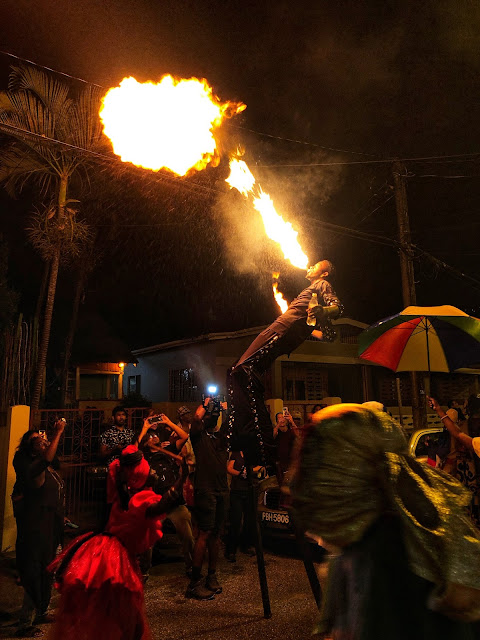
With technology, some skills may be “endangered.” Dr Anjani Ganase looks at the traditions of stilt walking around the world, and celebrates the revival of Moko Jumbies.  The art of stilt walking was created by multiple cultures around the world for practical purposes. There were many advantages to being elevated, to be able to reach higher, see farther, wade deeper and move faster. In many places, the skills of stilt walking also drove the competitive and entertaining aspects of proving one’s skills, from which emerged the use of stilt walking in dance and games.   Today, we may have moved beyond the need of the stilts as tools, but they continue to be used in lively art forms, with special appeal to youth.   Here, in Trinidad and Tobago, our stilt walkers, the Moko Jumbies dare to go higher, and to move in more complex manners. Being among Moko Jumbies is mesmerizing, it’s like being among giants. Let’s dig into their history and find out what they represented. ...

Fete, Re-purpose, Recycle, Repeat!

Image
Carnival is over. And we may be proud of the clean streets on Ash Wednesday. But where does it all go: the glitter, the beads, mylar strips, armbands, feathers, zippers and flag poles, plastic and metallic supports? Dr Anjani Ganase suggests we take a sober look at waste generated by Carnival, and make better plans for the next one. Carnival is rags, flags, beads, feathers and bumsies set in motion to a soca beat. It is symbolic of excess in every way but an integral part of our culture. While the drinking, wining and waving can be put away for another year, the materials in the costumes, the single use plastic containers, cups and cutlery used to water and feed people on the road used on two days of masquerading, as well as at the fetes happening in the two months leading up to carnival can amount to more than a hill of garbage. Hundreds of thousand masqueraders and revellers generate a huge amount of plastic waste. The majority of this will end up in land fills, in our drains a...

Carnivals and the Sea

Image
Even if the costumes are beautiful, Carnival should remind us to be afraid. "If your mas not saying ting or frightening small children or making old men bawl for obeah, what are you even doing?” * according to the facebook post of mas-maker Robert Young. Pat Ganase comments on some features of 2017 Carnival. This was first published in the Tobago Newsday on March 9, 2017 How many times have you played sailor, plain whites or long-nose, fancy with elaborate headdress, or seen a band depicting sea creatures so fantastic that you are certain that they could not exist, and never even thought of the sea? Well, like the ingenious carnival bat costumes that emerged from the rabies outbreak in Trinidad in the 1930s, all carnivals of the sea now need to be cautionary tales, asking us to pay attention to the plight of the waters around our shores, the ocean from which the health of the world as we know it ensues. We are islands after all, and have always looked to the sea for susten...