Posts

Sharks and Coral Reefs

Image
Dr Anjani Ganase looks at the web of life that connects sharks to healthy coral reefs. The relationship is both intimate and ecological; with as profound an effect on human life as keeping Campy the sabre-winged hummingbird in the Main Ridge rainforest. Over the last fifty years, shark populations have plummeted worldwide. The most recent study of sharks decline was tracked through the Queensland (Australia) shark control programme, where netted drumlines were draped along more than 1000 km of the Queensland coastline adjacent to the largest barrier reef in the world to protect humans from shark attacks. Over the last 55 years, since its inception in 1962, the shark populations have dropped by 70 – 90 % depending on the species of the shark. Parallel to the decline in numbers, shark samples in later years were also smaller in size. Essentially the nets reflect the exploitation of sharks over five decades from regional fishing pressures, apart from the devast...
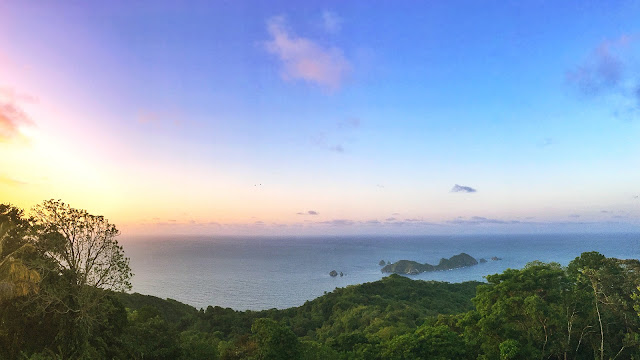
Where the birds are, in north Tobago

Image
Faraaz Abdool tells us about Flagstaff Hill, just above Charlotteville, and makes the case for protecting bird habitats in north Tobago. Flagstaff Hill, located on Tobago’s rugged northeastern corner has been a vantage point for hundreds of years. From soldiers belonging to the French and British armies signaling to their comrades at sea centuries ago, to the present-day tourist taking a self-stitching panoramic photograph of the wild coastlines, quaint houses and lush greenery against a background of endless ocean; Flagstaff Hill has not only a rich and timeless history but a vibrant feel that is unique.  Twilight is always a magical time at the top of Flagstaff Hill. Photo by Joanne Husain. Sure enough, the bleating of the Rufous-vented Chachalacas (Cocricos) is a quintessentially Tobagonian sound – but on the top of Flagstaff, this sound is carried by steady, strong winds that barrel up the steep cliffs after having blown unbothered for many miles over the Atlanti...

LIFE FINDS A WAY… BUT WILL IT BE HUMAN?

Image
Corals and sponges have been around for about 500 million years; humans for just about 300,000 years. Will the mass extinction that our species has precipitated see humans returning in a hardier long-surviving form (like the corals)? Or will we go the way of the dinosaur? Dr Anjani Ganase takes the long view of life from its inception in the oceans. Coral or dinosaur? That is the question. After the earth’s violent creation, over 4.5 billion years ago (bya), the next 700 million years were relatively stable as the earth began to cool. Steam turned to rain and the rain filled our oceans. It is also thought that some of our water was imported through a series of bombardments by meteorites. The oceans were much wilder back then, as the moon was much closer, and so the tidal changes were a thousand times more extreme than now. Over time, the moon has moved further away, about 3 cm away from earth every year.  Yet, life on earth did not begin for another billion years. It is t...

Shape-shifters on Caribbean Coral Reefs

Image
Corals and sponges create the vibrant and varied panoramas of Caribbean reefs. It is, however, the versatility and services of sponge organisms at the cellular level that hold the secret of sponges. Dr Anjani Ganase explains the marvellous science of sponges. As abundant as corals on Caribbean reefs are marine sponges. Snorkelers and divers often mistake them for corals because of their high prevalence on coral reefs; they add structure to the reefscape and stand out from the background in bright purple, orange, yellow and blue against the dominant brown colouration of Caribbean corals. Marine sponges may appear to compete with corals for space and attention but they are intimately dependent on them for the infrastructure to settle and grow. Marine sponges (Phylum Porifera) are relatively simple animals that lack a digestive tract and a nervous system. Sponges are impressive filter feeders, where some species can pump thousands of litres of water within ...

Welcoming Long Distance Travellers

Image
How do we make visitors welcome on our islands and in our seas? By preserving habitats and food sources. But most importantly, by appreciating the visitors. Dr Anjani Ganase considers the meaning of Trinidad and Tobago’s signing the Convention to conserve migratory species such as sharks, birds, turtles and the Monarch Butterfly.  On December 1, 2018, Trinidad and Tobago became the 127th country to sign on to the Convention on the Conservation of Migratory Species of Wild Animals, as part of the United Nations Environment Programmme. According the Convention, countries must recognize that migratory wildlife and the environments that support them are irreplaceable, have extant value for future generations and it is our responsibility to wholly care for these organisms. Signatories of the Convention are mandated to actively protect migratory wildlife and the habitats they utilise when they occur within the country’s jurisdiction. This includes their food sources and the quality an...

The Journey beyond Coral Reefs

Image
The initiative to share the world of coral reefs with citizens and students of Trinidad and Tobago may have ended, but the quest for healthy oceans and the health of people continues. Dr Anjani Ganase reviews the International Year of the Reef TT and encourages us to continue “chasing coral.”  Awareness and Action 2018 was the International Year of the Reef (IYOR), a effort initiated by the International Coral Reef Initiative (ICRI) to raise global awareness of the value of coral reef ecosystems. Trinidad and Tobago joined several countries around the world, as well as forty non-governmental and intergovernmental agencies, to learn about coral reefs and the threats they face, especially imminent climate change, and to engender action for coral reef conservation.  Throughout the year the IYORTT partnership grew significantly. It started with a core group of scientists who began discussions with other environmental groups and educational institutions. As the conversat...

Why Mangroves must be protected

Image
Mangrove forests provide coastal protection and habitat for many species. Dr Anjani Ganase takes us into an ecosystem that is as valuable as coral reefs, especially to small islands like Tobago. Mangroves are often depicted as uninviting and unfriendly environments, not pleasing to the eye, a little bit smelly and a haven for mosquitos and sand flies. Yet within this narrow piece of real estate between terrestrial forests and marine ecosystems, mangrove forests are lush with marine, estuarine and terrestrial life and, when protected and managed well, rich in biodiversity.  Mangrove forest, Petit Trou, Tobago. Photo by Anjani Ganase Mangrove forests are inshore coastal communities, where they can occur in salt, estuarine or fresh water conditions. They prefer calm waters that allow the mangroves to effectively root themselves into the substrate of the water column without being swept away. Even though mangroves may prefer freshwater conditions - they occur in areas with...