Posts

Connecting to Climate Change

Image
Why should we pay attention to coral reefs, which are only half alive? What does climate change have to do with Tobago? What does it all mean? Pat Ganase provides a perspective. Around the world, we are witnessing catastrophic changes that we are told have been brought about by man’s industrial progress. It turns out that over the last century, our activities are heating up the planet. Ice caps are melting. Terrific storms are brewing over warming waters. The coral reefs are dying. The mean temperature of the planet’s surface has heated up by one degree Centigrade since the industrial age, just over 100 years ago; and is edging up by fractions of a degree every decade. How could Tobago be expected to take responsibility for what seven billion of us together are shaping? Perhaps it will all pass us; and Tobago will be spared.   Mt Irvine Reef: though vibrant, fish life here is heavily impacted by pollution and sedimentation (Photo courtesy Anjani Ganase) CORA...
Plastic beaches: change of tide or change of behaviour?

Image
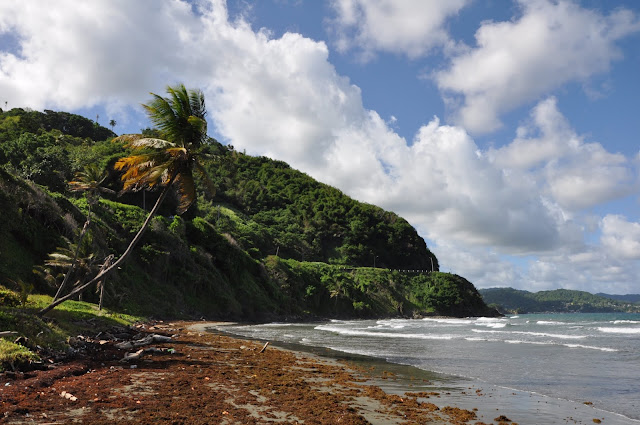
Shivonne M. Peters looks at  plastics on two Tobago beaches. The key to managing waste on our beaches will have to be based on science and observation: where is it coming from? Shivonne is Managing Director of Seven Environmental, a consulting company focused on the marine sector; and a PhD candidate in Marine Sciences at the University of Trinidad and Tobago. Email her at sevenenvironmental@hotmail.com Although convenient, readily available and an everyday part of our lives, plastics pose significant dangers to marine organisms such as turtles and seabirds through ingestion and entanglement. There is also the impact on us, which can extend far beyond riverine flooding and changes to the aesthetics of our favourite outdoor recreational spots. With an economy heavily dependent on tourism, Tobago’s coastal and marine environment should be distinguishably pristine. Sadly, this is not always the case. Furthermore, it may be easy for us to focus on the plastics that we see - water ...

The Village that sells itself

Image
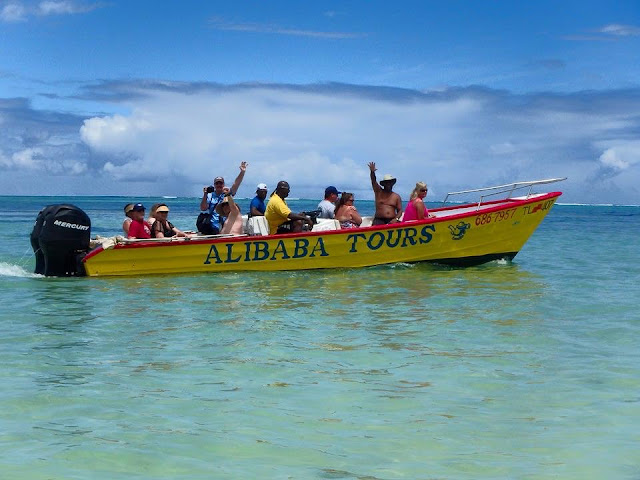
Tobago’s tourism industry has been in the doldrums, but one west coast village is bucking the trend with a lively trade in visitors. What is it doing right? This report by Pat Ganase first appeared in the Contact magazine (September 2018) and is reproduced courtesy the Trinidad and Tobago Chamber of Industry and Commerce.  Castara sells itself as the “real deal” in Tobago: an authentic Caribbean fishing village. But its property owners claim they don’t attend trade shows; they don’t advertise. How is it doing such good business? Is word of mouth so powerful? Is there some other way to reach a global market? If you search booking.com for accommodation in Castara Tobago, you’ll find 15 to 17 properties. SeaScape on Heavenly Bay, The Naturalist Beach Resort, Cottage Mango and Castara Retreats have recent rave reviews. On TripAdvisor, the top-rated accommodations in Castara are Castara Retreats, AliBaba’s Sea Breeze Apartments and Carpe Diem Villa with “seaviews from the bed...

Coral Reef Cleaning Stations

Image
Relationships among marine species are not only about food. The health and survival of species also depend on “grooming” services from other species. In this feature, Dr Anjani Ganase looks at the functions of some coral reef inhabitants as cleaners for larger species.  Divers often come across peculiar interactions between large fish or marine animals and smaller fish – Gobies, Wrasses – or with crustaceans, such as shrimps and crabs. These are not the typical predator-prey relationships but amicable associations, where the small fish or crustaceans can be seen moving about the body of the large predator foraging for ectoparasites and picking at dead tissue. The fish (the client) keeps as still as possible to avoid disrupting the activities of the smaller fish; it might even orient its head upwards and open its mouth and gills to give the fish or shrimp easy access to its cavities. The smaller fish or shrimp do not appear apprehensive at all about entering the mouth and picki...

Protecting Land and Marine Reserves Of Tobago

Image
Last week, this column looked at what individuals might do to protect their piece of paradise, their backyards in Tobago. This week, we review some special sites around Tobago that have been identified for national protected status, to be ratified by the Government. Pat Ganase reports. The National Protected Areas (NPA) Systems Plan for Trinidad and Tobago is complete, and now requires commitment through legislation and resources to be effected. Recommendations for Tobago include 13 terrestrial/ freshwater sites; 22 coastal/ marine areas; and extensive Open-Ocean Waters and Deep-Sea (OOWDS) areas amounting to some 15,600 km2 of the Exclusive Economic Zone (EEZ). Prior to 1970, there was a utilitarian focus on the natural resources in the marine environment around Trinidad and Tobago. By 1975, the marine area under jurisdiction extended 12 nautical miles beyond the shores; this was pushed to 200 nautical miles in 1984. Today, the Plan seeks to bring some 22% of the EEZ under pr...

Eco-solutions in your backyard

Image
What’s the real challenge against climate change? What can an individual do? Dr Anjani Ganase identifies the problem – using more than we need aka excessive consumerism – and talks about wise use of at least one resource, water. We often come across these all-in-one solutions for saving the environment. Such solutions appear in the form of social media video campaigns where a simple action/ purchase, such as reusable shopping bags, reusable straws, smart light and hybrid cars may be enough to save the planet. However, even with the consumer substitution of more “eco-friendly” products, as long as we keep consuming, we are essentially swapping one resource for another, and therefore we continue to draw from the finite capacity of our natural environment. Furthermore no eco-friendly substitute may be suitable, when we consider the numerous environments and economies globally. For a small island nation, the carbon footprint of importing and manufacturing greener products, especially ...

Flycatchers Abound

Image
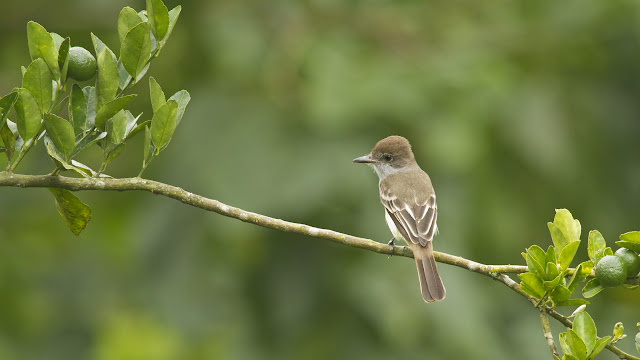
Birding enthusiast and photographer, Faraaz Abdool, takes us into the world of Tyrant Flycatchers. These birds are found all over Tobago and Trinidad. Enjoy Faraaz Abdool’s beautiful photos of these noisy little birds  (All photos courtesy Faraaz Abdool). One of the largest families of birds in the entire world, the Tyrant Flycatchers have 39 members that live within Trinidad and Tobago. Of these, a dozen can be found occupying different types of habitat across Tobago. They are not the most dashing of birds, as they do not sport the rich blues, greens or reds that have made some other tropical birds famous. What they lack in chromatic extravagance they make up for in charisma, often calling loudly or boldly doing battle with a stinger-equipped wasp.  Brown-crested Flycatchers tend to have a cone-headed appearance. Photo by Faraaz Abdool Most flycatchers have the word “flycatcher” in their name. For example, the Ochre-bellied Flycatcher is so named because of i...