Posts

The Latest Research from the Ocean
Image
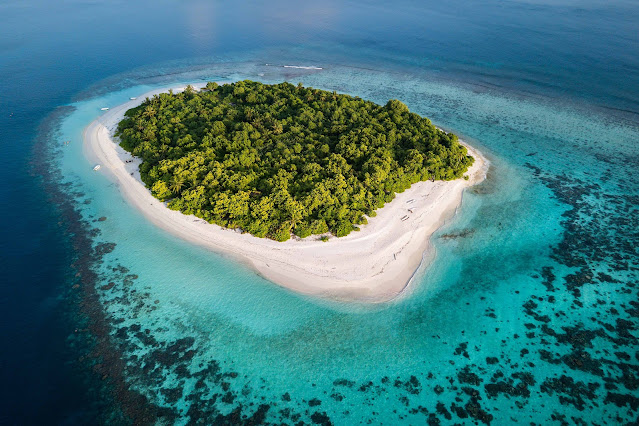
Although the ocean occupies more area than the land, land-based species are impacting the ocean in untold ways.   Dr Anjani Ganase looks at some findings from current research in ocean science. Deep ocean impacts from hurricanes Scientists from New Zealand discovered that some cyclones in the Pacific Ocean may leave behind a biological marker in the ocean that is stored in the sediments of the ocean. Scientists observed a large phytoplankton (micro-organisms living suspended in the water) bloom following Cyclone Oma off the coast of Vanuatu. Cyclones form as the ocean surface heats up. The cyclone cools any area in its path by churning up the water and at times even drawing cold and nutrient rich waters up from the deep. The phytoplankton take the opportunity to feed on the nutrients and multiply. In nearshore environments, cyclones ejected large amounts of water over land masses resulting in significant run off of land-based nutrient that results in algal ...
Preserving Wetlands for the Birds

Image
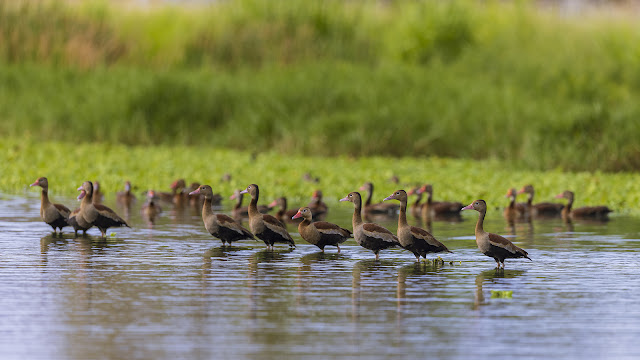
From highlands to coasts, Tobago is a birder’s paradise. Faraaz Abdool shares his affection and appreciation for ducks that inhabit and visit the wetlands, and reminds us that all waterfowl are protected by law in Trinidad and Tobago. All photos courtesy Faraaz Abdool   Mention of Tobago conjures images of beaches and coastlines, rugged or placid. Those who have visited the Main Ridge Forest Reserve dream of verdant, undulating hills and the myriad exquisitely feathered birds within. However, an undervalued part of the island’s landscape takes the form of fresh water and the surrounding terrain. Often abused and engineered into shape, bodies of fresh water have been drained, re-routed, dammed, and otherwise exploited for much of recorded history. Ever resilient, water finds a way, and life makes every attempt to adapt to changed layouts.   In low-lying southwest Tobago, the network of wetlands has been significantly altered by human occupation and activity. Golf course...

Oasis in the Oil Industry

Image
Joanne Husain visits the Pointe-a-Pierre Wildfowl Trust, and encourages schools and families to enter this classroom in nature on the edge of Trinidad and Tobago’s 100-year-old refinery. Photos provided by Faraaz Abdool     Ducks steadfastly preening at the water’s edge are momentarily interrupted by an aureate feathery flash. Three blue-and-yellow macaws bank, announcing their arrival with cacophonous cries before settling in a mahogany grove. A serpentine figure emerges from the lotus-laden pond, but it possesses a dagger-like beak and not a forked tongue. Poui and immortelle blooms scattered like confetti beckon a celebration of our natural heritage in the most unusual of places – a once roaring but now semi-defunct oil refinery. This is the Pointe-a-Pierre Wildfowl Trust, an organization that has been at the forefront of conservation and environmental education efforts in Trinidad and Tobago for over 50 years.   Frankie is a Blue-and-yellow Macaw rescued from ...

Turning the tide against deep-sea mining

Image
Dr Diva Amon, marine biologist, researches the habitats and animals of the deep ocean, and how human activities impact them. She has participated in expeditions around the world and is a consultant on ocean policy. She is a founding member and director of the TT NGO SpeSeas and a scientific advisor at the Benioff Ocean Science Laboratory at University of California, Santa Barbara. This is the second part of the two-part feature, adapted from an article published on the World Economic Forum’s The Agenda on July 21 2022 .All photos courtesy NOAA Office of Ocean Exploration and Research While the contentious climate talks in Egypt (COP 27, November 2022) captured headlines, another international meeting took place under the radar in Jamaica. The climate COP attracted 35,000 attendees; the meeting of the international body that regulates and controls mining activities in the high seas drew fewer than 500 delegates. Nonetheless, the outcomes of both meetings have the potential to profoundly...

Should we mine the deep ocean?

Image
Dr Diva Amon, marine biologist, researches the habitats and animals of the deep ocean, and how human activities impact them. She has participated in expeditions around the world and is a consultant on ocean policy. She is a founding member and director of the TT NGO SpeSeas and a scientific advisor at the Benioff Ocean Science Laboratory at University of California, Santa Barbara. This is the first part of a two-part feature, adapted from an article published on the World Economic Forum’s The Agenda on July 21 2022. "By Hercules! In the sea and in the ocean, vast as it is, there exists nothing that is unknown to us, and, a truly marvelous fact, it is with those things which nature has concealed in the deep that we are the best acquainted!" Pliny the Elder, 40 AD. Pliny then proceeded to list just 176 species. Two thousand years later, we’re only just beginning to realize his statement was not only incorrect, but it echoed the contented ignorance of the time. Estimates now sug...

Carnivals of the Sea

Image
From time to time, bandleaders have been inspired by and chosen to represent themes of the sea. Irving “Mac” McWilliams who was a fisherman at Las Cuevas created Wonders of Buccoo Reef to win the Band of the Year title in 1971. Peter Minshall’s Carnival of the Sea was the Band of the Year in 1979. Individual portrayals have dramatised sea creatures as giant, fearsome, awe-inspiring. Anjani Ganase, marine biologist, comments on some spectacular sea mas from the past.     Peter Minshall presented a Carnival of the Sea in 1979 and won the Band of the Year prize. His performance section was called Sea Serpent. Individually, the costumes encouraged sinuous movements. Together, the section created and moved in conga lines.   Although sea snakes are not found on coral reefs in the Caribbean, their presence in the Indian and Pacific Oceans is regarded with fondness. They are visual wonders underwater. While sea snakes are highly venomous, they are not aggressive. There ...

Leading the Way in Renewables

Image
Anjani Ganase visits Jamaica and considers their proactive approach to building resilience. She finds solutions in reducing plastic waste, diversifying energy sources but also diversifying administration of resources.   Jamaica has long been a tourism destination making the most of natural features like Blue Hole, photo by Anjani Ganase Jamaica is a major importer of oil and gas. However, the global economic crisis and the urgency of response needed for climate change have pushed Jamaica to develop a more resilient energy system, one that will withstand political crisis as well as natural disaster.   Their National Renewable Energy Policy (2009) focussed on energy conservation and diversification aims for 20 % renewables by 2030. Since 2020 Jamaica is relying on renewables to support 12 % of the national power demand – specifically 3 % hydroelectric, 6 % wind, 3 % solar. The rest of the energy system comes from clean natural gas (supplied by Trinidad...