Posts

My Deep Sea, My Backyard
Image
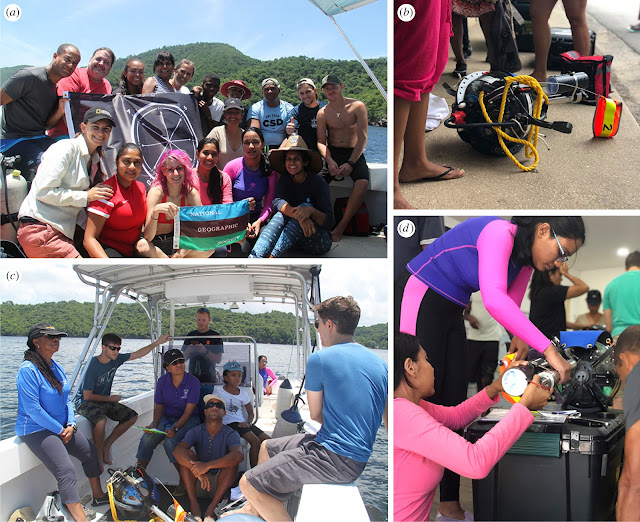
An innovative project to estimate interest and build capacity in deep ocean exploration was launched in 2019, piloted by Dr Diva Amon, leading Deep Sea Biologist in ocean exploration and conservation from Trinidad and Tobago. She has recently co-authored and published the results of the study conducted in two island nations, Trinidad and Tobago and Kiribati. Dr Anjani Ganase reports.   This is the UN Decade of Ocean Science for Sustainable Development in which we expect plans for better ocean conservation and management, and better ideas for sustainable blue economies. On paper such ideas seem simple enough, but the concept of sustainability is heavily dependent on the ability to carry out local research to inform plans for protection and sustainable management. Our ocean is our biggest resource, yet it is the least explored, and mostly unknown. It is a major source of provision – food, medicines - but more than this, it regulates our climate and weather patterns crucial for ag...
Dwindling Global Biodiversity

Image
Dr Anjani Ganase surveys what the world is losing through human activities, and makes an appeal for living within our means in the natural world.   On May 22, we observe the International Day for Biological Diversity. Biodiversity denotes the variety of living organisms that make up the natural world around us. The world as we know it is the culmination of evolution over billions of years, the result of the slowly ever-changing global environment. Organisms evolve and co-evolve with each other and the environment. The biodiversity of ecosystems is the result of balance between competition for resources and external disturbance events that create opportunities for new life. The diversity of habitats and organisms not only sustain biodiversity but is essential to our survival. Plant stocks don’t just supply the fruits and vegetables we eat today but provide the genetic stock for future supplies in a changing climate. The terrestrial and marine habitats provide ...

Tobago as an Eco-Destination

Image
Research and study are intrinsic to current ecotourism trends; is Tobago ready? The UNESCO Man and the Biosphere designation for Tobago’s Northeast region presents an opportunity for all of Trinidad and Tobago to be forward thinking. Pat Ganase reports on the first steps. What’s in it for me? Is this indeed the response of most Tobagonians when they are told that Northeast Tobago has been designated by UNESCO a Man and the Biosphere (MAB) region, a learning site in nature where research and science and innovation might result in nature-based solutions to improve human lives? Aljoscha Wothke, key technical expert on the Government’s application to the UNESCO MAB governors, believes, “Tobago is beginning to understand. This is the best tool currently available for economic development. There are many international organisations looking at Northeast Tobago. I am very excited for the next steps which include management plans, all aspects of training including g...

The Night Birds of Tobago

Image
Faraaz Abdool has taken up residence within the Northeast Tobago Man and the Biosphere Reserve to document the flora and fauna. Here are some of the creatures he sees after dark.   Photos by Faraaz Abdool Humans have evolved enthralled and terrified of the night. The animals which depend on the world devoid of light seem alien to us. We are predominantly visual creatures. Numerous legends abound, almost always involving some aspect of the perceivable combined with a healthy helping of the imperceptible. Many nocturnal animals have been wrongfully accused, becoming victims of fearful superstitions. Some view them as harbingers of death and misfortune, others believe they are incarnations of evil spirits. As a result, they are often persecuted and chased; and may even be killed on sight. Nocturnal animals are carefully and deliberately adapted to survive in a world that is the opposite of what we are accustomed to. While most of us sleep at night and wake during the day, these an...

Respect for Sea Turtles

Image
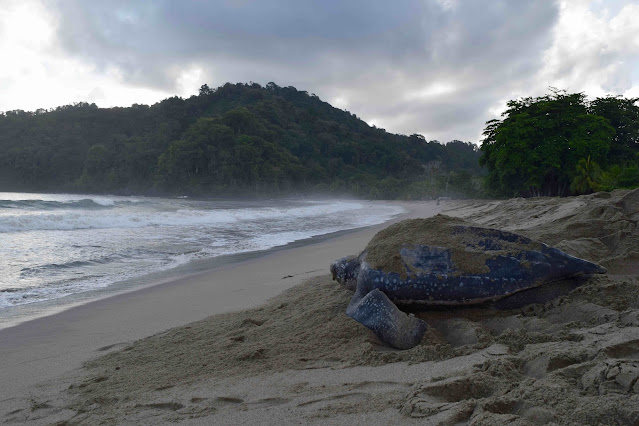
Every year, sea turtles - including the iconic leatherback - return to Trinidad and Tobago shores for their nesting season.   Dr Anjani Ganase suggests how we should treat these very special guests.   Every memory of going to observe turtle nesting has become a lasting one. I still remember going to Matura as a child, following my mother in the dark along the long sandy stretch only to suddenly stumble on to a laying leatherback bigger than me!   Fast forward to Grande Riviere in my early twenties where leatherback turtles were literally bumping into each other in the darkest night, on the beach with the highest density of nesting turtles in Trinidad. Such encounters were always guided by an expert and were significant for the respect and care that were expected if we were to be in the presence of these ancient and majestic creatures.    Leatherback turtle returning to the sea in Grande Riviere. Photo by Anjani Ganase   The leathe...

Little Tobago: a walk in the woods

Image
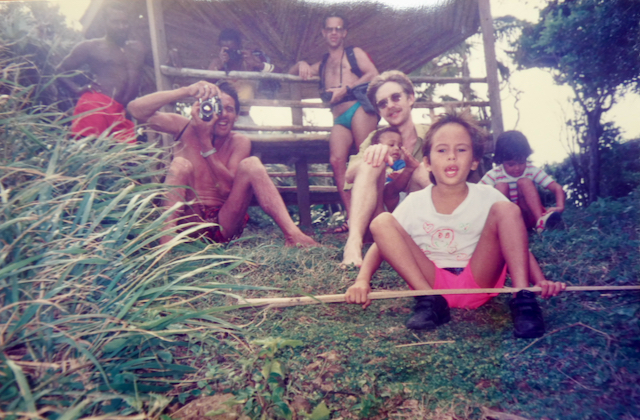
First published in Newsday TT on April 21, 2022. Here is the text with a few more photos. Pat Ganase revisits Little Tobago after 32 years for a stroll into the past. Photos by Pat Ganase.   1990: looking down the cliffs towards the wild sea   1990: living dangerously with Jet, 8 week old pup 1990: Wordsworth Frank leads the tour In 1909, Sir William Ingram, a British peer and politician and managing director of the Illustrated London News, bought the small star-shaped island off the north-east coast of Tobago. He would turn it into a bird sanctuary to accommodate a small colony of the Greater Bird of Paradise (Paradisaea apoda) which was over-hunted in its native New Guinea for feathers for ladies hats. Two dozen nesting pairs were introduced - and the island which had in the late 18 th century produced a very high yield of cotton per acre - became known as Bird of Paradise island. In 1924, after Sir William died, the island was deeded to the Governm...