Posts

Coral Bleaching on the Great Barrier Reef

Image
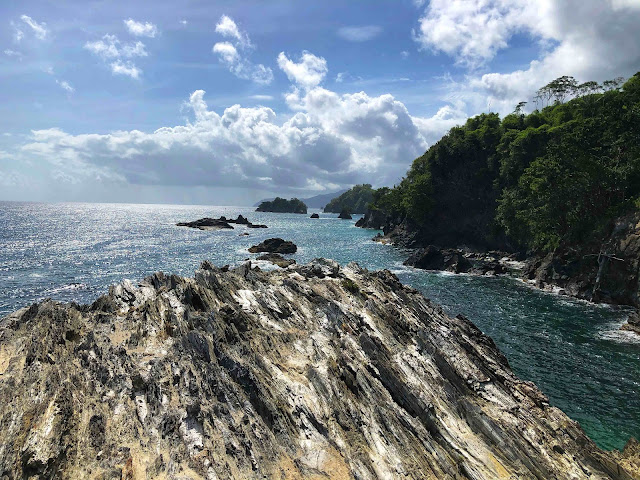
  Dr Anjani Ganase talks about die-off of the most vulnerable creatures on the planet to global warming - corals.   Bleaching is happening today and on the coral reefs around Tobago; and this planetary indicator does not bode well for humanity.   Over the past week, marine scientists from the Great Barrier Reef Marine Park Authority have observed coral bleaching on the Great Barrier Reef (GBR). Certain areas are being described as severe, particularly along the central GBR near Townsville, a community largely dependent on the reef ecosystem for jobs and livelihoods. This year (possibly for the first time) the reefs are experiencing above average warming conditions, despite being in a La Niña phase. La Niña is associated with higher rainfall and cloud cover, conditions associated with cooling oceanic conditions. Nevertheless, many parts of the central and southern sections of the GBR are experiencing 0.5 - 2 degrees Celsius above the average temperature, while the nort...
An Ecosystem in a Teaspoon

Image
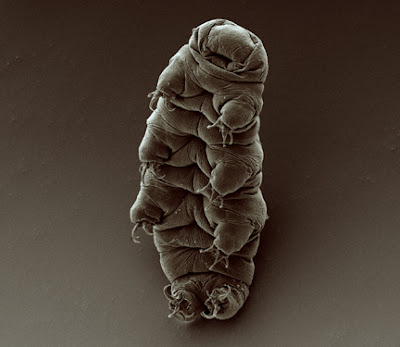
  Dr Anjani Ganase discusses the use of DNA studies and technology to understand and manage our environment. When William Blake wrote in the late 18 th century, “To see a world in a grain of sand and heaven in a wildflower; hold infinity in the palm of your hand and eternity in an hour,” did he envisage that within two centuries later, scientists could explore an entire ecosystem from minute traces of matter? This is how we are learning more about the earth’s history. Will we be able to use this information to help us create a better future? The study of ecology allows scientists to explore and immerse themselves in observing the relationships between an organism and its physical and chemical surroundings. Everything an organism does in its environment is evident in the DNA tracks left behind. DNA, or deoxyribonucleic acid, is the genetic instruction carried in the cells of all living organisms. DNA is everywhere: in sloughed off dead cells, any drop of s...

The latest on Climate Change from the IPCC

Image
  Dr Anjani Ganase reviews the latest reports on climate change from the world’s scientists. They indicate that small island states must take care of the land (agro-forestry) and manage marine resources… with urgency. (First published in the Newsday TT on March 10, 2022)   Global research has concluded that climate change continues to adversely impact most natural and human systems around the world, including many ecological services, such as food and water supply, pollination, clean air, tourism, health, clean water, coastal protection, and climate regulation. For humans, water and food production, health and wellbeing, have all diminished. About 3.3 to 3.6 billion people (more than one-third of the world population) live in hotspots vulnerable to high impacts of climate change. Many of these areas already have social and environmental ills, such as failing governance and poverty. Central and South America, West and East Central Africa, South Asia, and small island stat...

Living in the Extreme

Image
Creatures have adapted and survive in every habitat on Earth. Dr Anjani Ganase looks at some of the strange organisms that thrive in extreme conditions.   Extremophiles are organisms that are adapted to living in the most inhospitable places on earth: in places of extreme cold or hot temperatures, under acidic or alkaline conditions, even in places under extreme pressure, buried under rocks or in the deep ocean. Such organisms have developed physical and behavioural traits that permit them to survive and to thrive in places that are devoid of other competing life.   DESERT RAINBOW FISH native to Australia, is a rare species of fish found in arid and semi-arid environments. They live in schools and grow to ten centimetres in length; and are iridescent in colour. They are adapted to living in small pockets of slow-moving water, such as watering holes and ephemeral streams (bodies of water that remain for a short period after flooding), lakes and stock...

Is there something to learn from Barbados?

Image
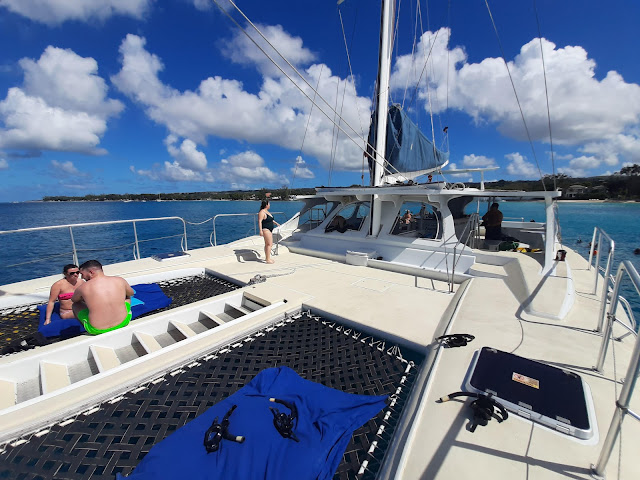
Shivonne Peters, marine scientist and consultant, writes about her recent visit to Barbados and suggests what Tobago might take from that island’s efficient hospitality industry   Countries around the world are attempting to restart economic activities as Covid-19 is becoming more manageable. In the Caribbean, tourism, the region’s main economic driver, is on the uptick as many visitors, especially from North America   and Europe, are   starting to travel. My recent trip to Barbados was more than a vacation as I was curious to see why tourism was thriving in that beautiful island; and what best practices we might adopt in Tobago to make our product more attractive and competitive on a regional and global scale. One may wonder if the tourism products on these two islands are so different. In my view, it seems to come down to three things: the treatment and care of the marine environment; customer service; and the mindset of tourism operators. Tiami...

Secret Rituals of the Rainforest

Image
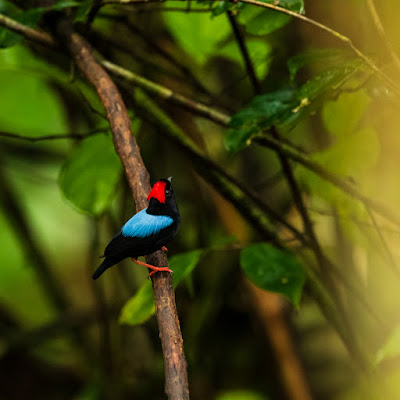
  Faraaz Abdool returns to Tobago’s Main Ridge Forest Reserve. Birds are everywhere. Who knows what we might find in these easily accessible forests, with a knowledgeable guide? (All photos courtesy Faraaz Abdool)   An adult male Blue-backed Manakin at the lek. Squelching through one of the many muddy trails leading into the Main Ridge Forest Reserve, I drew in a sharp, deep breath. The crisp, cool mountain air rushed into my lungs, satisfying my soul on so many levels. The pandemic had brought a months-long separation between me and Tobago’s lush rainforest. Finally, this spell was broken, and I was back. Blooming side by side, the vivid vermilion flowers of the invasive immortelle almost overshadowed the Olympic torch-like flowers of the native bois flot tree. Both species of trees provided a banquet to countless nectar and fruit seekers. From oropendolas to honeycreepers, the canopy was abuzz with activity. The raucous calls of the Rufous-vented Chachalacas were inter...

What does the fish say?

Image
  Clicks and buzzes on coral reefs suggest that there is communication by sound under the sea. Who is speaking? And what might they be saying? Dr Anjani Ganase discusses research on sounds emitted by fish. For life in the ocean, water becomes the ideal medium for communicating by sound compared to air. Sound travels five times faster and much further distances in water compared to air. When it comes to other communication methods, by comparison, the use of smell (olfactory) or sight is limited to much smaller spaces. While this may not be obvious on the brightly lit shallow, buzzing coral reefs, for most of the ocean that is in low light or no light conditions, sound becomes very important. Most studies of sound communication listen to large marine mammals, who use sophisticated sounds patterns to communicate with each other and to navigate distances of hundreds of kilometres. Less understood are the sounds used by fish to communicate with each other at close range, or whether th...