Posts

Is there something to learn from Barbados?
Image
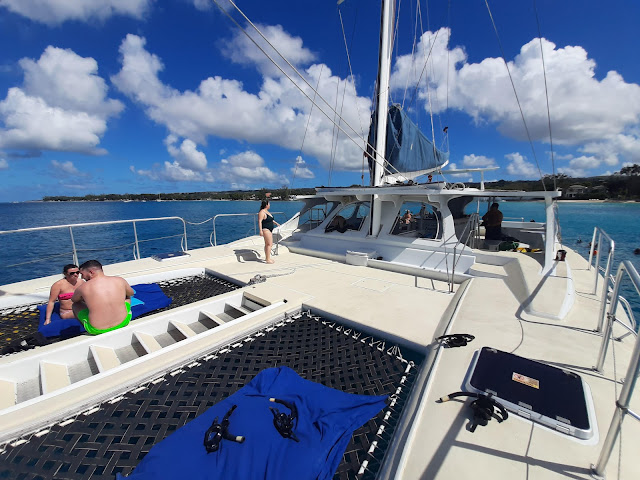
Shivonne Peters, marine scientist and consultant, writes about her recent visit to Barbados and suggests what Tobago might take from that island’s efficient hospitality industry   Countries around the world are attempting to restart economic activities as Covid-19 is becoming more manageable. In the Caribbean, tourism, the region’s main economic driver, is on the uptick as many visitors, especially from North America   and Europe, are   starting to travel. My recent trip to Barbados was more than a vacation as I was curious to see why tourism was thriving in that beautiful island; and what best practices we might adopt in Tobago to make our product more attractive and competitive on a regional and global scale. One may wonder if the tourism products on these two islands are so different. In my view, it seems to come down to three things: the treatment and care of the marine environment; customer service; and the mindset of tourism operators. Tiami...
Secret Rituals of the Rainforest

Image
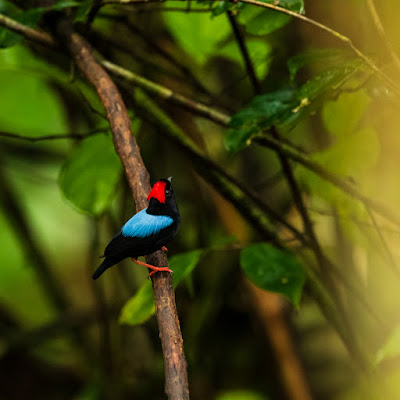
  Faraaz Abdool returns to Tobago’s Main Ridge Forest Reserve. Birds are everywhere. Who knows what we might find in these easily accessible forests, with a knowledgeable guide? (All photos courtesy Faraaz Abdool)   An adult male Blue-backed Manakin at the lek. Squelching through one of the many muddy trails leading into the Main Ridge Forest Reserve, I drew in a sharp, deep breath. The crisp, cool mountain air rushed into my lungs, satisfying my soul on so many levels. The pandemic had brought a months-long separation between me and Tobago’s lush rainforest. Finally, this spell was broken, and I was back. Blooming side by side, the vivid vermilion flowers of the invasive immortelle almost overshadowed the Olympic torch-like flowers of the native bois flot tree. Both species of trees provided a banquet to countless nectar and fruit seekers. From oropendolas to honeycreepers, the canopy was abuzz with activity. The raucous calls of the Rufous-vented Chachalacas were inter...

What does the fish say?

Image
  Clicks and buzzes on coral reefs suggest that there is communication by sound under the sea. Who is speaking? And what might they be saying? Dr Anjani Ganase discusses research on sounds emitted by fish. For life in the ocean, water becomes the ideal medium for communicating by sound compared to air. Sound travels five times faster and much further distances in water compared to air. When it comes to other communication methods, by comparison, the use of smell (olfactory) or sight is limited to much smaller spaces. While this may not be obvious on the brightly lit shallow, buzzing coral reefs, for most of the ocean that is in low light or no light conditions, sound becomes very important. Most studies of sound communication listen to large marine mammals, who use sophisticated sounds patterns to communicate with each other and to navigate distances of hundreds of kilometres. Less understood are the sounds used by fish to communicate with each other at close range, or whether th...

Transitioning to Renewables

Image
  Dr Anjani Ganase considers the lessons learned from fossil fuels as we shift to renewables, and urges a shift from continuous growth to an ideal of wellbeing.   COP26 called for rapid transitions over the next decade to keep global temperature rise below 1.5 C for the benefit of humankind. But the need to transition our energy sources away from fossil fuels to renewable alternatives in the face of climate change brings different risks. And unless the lessons learnt from the rampant expansion and exploitations of the fossil fuels industry are not applied (through regulations) to the development of the renewable industry, we will continue to experience significant losses in biodiversity through habitat loss and degradation. Scientists have estimated that the Anthropocene – era of humankind - has produced the sixth mass extinction with a range of 150,000 – 260,000 species lost over the last 500 years which is about 100 - 1000 times higher than backgroun...

Two Trinis come home to Tobago

Image
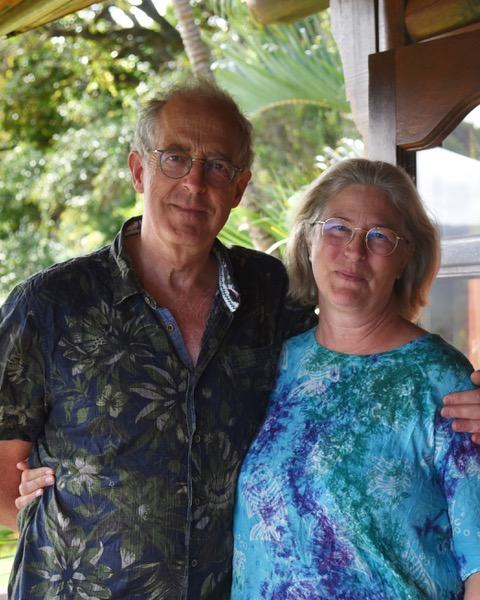
Two Trinidadians share their experiences of Tobago when they return to the land of their birth after two years   Julie Baker was born and grew up in Pointe-à-Pierre. She worked at Amnesty International Secretariat in London. After her children were born, she became a primary school teacher, and retired in 2019 after nearly 30 years.  She is now married to Tim Baker-Bartholomew, an actor and writer, with three boys of his own.  With grown up children, their shared interests are birding and gardening.  Julie is a stained-glass artist. She is the daughter of Richard ffrench (A Guide to the Birds of Trinidad and Tobago.)     Tobago is my happy place. I got married on Stonehaven beach in 2008, and Tim and I have been back nearly every year since then, until the pandemic hit.    Tobago is where we came during school holidays, often staying at the Turpin’s beach houses in Charlotteville. I have wonderful memories of family time, swimming and ...

Treasure in the Trinity Hills

Image
There’s much more than potential oil and gas deposits to be found in the Trinity Hills. Faraaz Abdool recounts his exploration. All photos by Faraaz Abdool   The mountain ranges of TT hold universal appeal as the most conspicuous natural features of our tiny islands. Visible from considerable distance, they rise above the plains of central Trinidad and plunge into the ocean surrounding northeast Tobago. On Tobago, there is the Main Ridge. On Trinidad, there are three distinct mountain ranges. While the first two are simply Northern Range and Central Range, the mysterious third range is distinctive and eloquent, Trinity Hills. I use the term “mysterious” as the Trinity Hills lies in Trinidad’s remote southeast. The towering Northern Range is backdrop to the most densely populated area on the island and straddles the width of Trinidad. The Central Range is plainly visible from the main north-south thoroughfare along the western portion of the island. But the Trinity Hills is ne...

Anticipating Sargassum Season

Image
It’s not too early to begin preparing for summer sargassum.   Dr Anjani Ganase reviews the latest Sargassum White Paper generated by the United Nations Environmental Programme. The big picture requires trans-Atlantic cooperation - West Africa and Brazil   to fully understand the annual sargassum influx .   Since 2011 and persisting to today, sargassum has been washing up on beaches and coasts of the Caribbean and South and Central America as regular summer events. The highest amounts to date were 27 million tonnes (estimated) of sargassum washed up in 2018; with 20 million tonnes in 2019.   Amazon and Sahara While the two species of sargassum ( S. natans and S. fluitans ) that wash up on our shores naturally occur and grow in oceanic gyres (in the mid-Atlantic), the excessive amount of algal blooms transported is new. Scientists are now certain that these blooms are the result of increased nutrient outflow from the Amazonian basin, mixed...