Profit powers purpose
Profit is not a bad word but the key to managing a sustainable future. Dr Anjani Ganase presented at the EurochamTT (European Business Chamber in Trinidad and Tobago), Sustainability Workshop in Tobago where feature speaker Mark Thomas shows us why profitability and sustainability go hand in hand. Mark is the Partnerships and Development Finance Officer in the United Nations Resident Coordinator Office for Trinidad and Tobago, Aruba, Curacao and Sint Maarten. At the UN, he coordinates partnerships between the United Nations and public, private and civil society sectors, and supports resource mobilization for accomplishment of the Sustainable Development Goals
Let me start with two questions that bother me. Why is it that every time we talk about sustainability, business somehow ends up being blamed? And why is it that every time business hears that word, what it hears is: more cost, more rules, more headaches? From the outside, business is made to look like the villain—too focused on profit. From the inside, sustainability can feel like a threat to survival. So, we get stuck. Nothing moves. And everyone loses. But what if we turn it around?

EuroChamTT, sustainability workshop attendees hosted at Kariwak, Tobago.
Photo courtesy EuroChamTT.

Opening panel, from left to right, Marie Louise Norton-Murray, Executive
Director EuroChamTT, Her Excellency Cécile Tassin, Ambassador of the European
Union to the Republic of Trinidad and Tobago, and Mark Thomas, Partnerships
Officer, UN Resident Coordinator Office. Photo courtesy Sharda Mahabir
Sustainable means profitable
Every business exists to solve a problem for someone else—and to make a profit doing it. It is the engine. No profit means no reinvestment. No reinvestment means no growth. And without growth, even the best ideas remain small and easily lost. Big problems do not get solved by good intentions. They get solved by solutions that grow, are repeated, and last. That is why business is not the enemy of sustainability. Business is how sustainability actually happens at the scale our challenges demand.
Einstein once said that compound interest was the most powerful force in the universe. With respect, profit is more powerful—because it allows a good idea to repeat, scale, and change the system. Only solutions that make money get copied. Profit is not greed; it is the fuel that turns a clever idea into something that reshapes how the world works.
Here is where the global picture matters. Almost every government on Earth has now committed to the Paris climate agreement, the Sustainable Development Goals, and frameworks to protect nature and oceans. These are not symbolic gestures. They are economic signals—and practical tools—moving through banks, insurers, supply chains and investment committees. They also give governments a shared roadmap for how to set rules, design incentives, and invest in infrastructure in ways that reward responsible business.
The message is simple: it is becoming more expensive to do business in ways that damage the environment or destabilise communities. Companies that pollute, waste resources or ignore their social impact now face higher insurance costs, tougher regulations and reduced access to finance. Companies that cut waste, adopt cleaner systems and invest in their people are rewarded with better loan terms, premium market access and greater resilience. And because governments are aligned through these global agreements, they can shape policies—on energy, transport, finance and trade—that make those better choices easier and more profitable. That is how the global marketplace now operates—and Trinidad and Tobago is part of it.
Sustained people, sustainable product
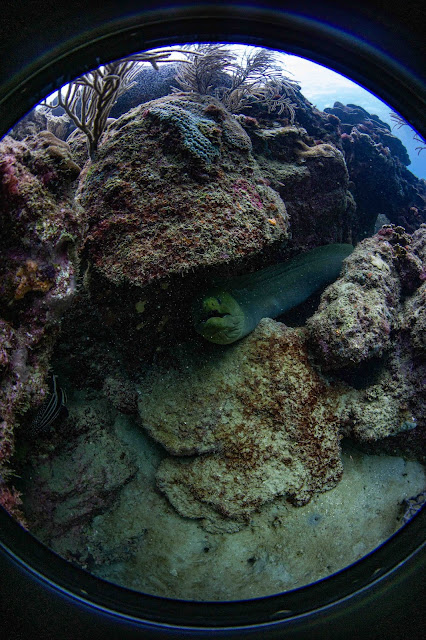
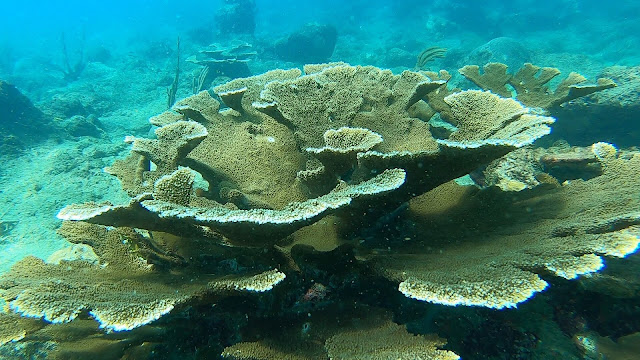
In Tobago, the connection is immediate. The beaches, reefs, forests and clean water are not scenery—they are the product. When reefs bleach, when beaches erode, when water systems fail, tourism does not just lose its shine; it loses its viability. Sustainability there is not a moral choice. It is operational necessity. Trinidad faces the same forces through a different lens. When floods shut down the highway, when power becomes unreliable, when food import bills spike, when crime rises because young people see no path forward, those are not distant social issues. They are business risks happening now. They raise costs, deter investment and constrain growth. A business cannot outgrow the trust of its community. A country cannot outgrow its infrastructure. An economy cannot outgrow social stability.
But here is what we keep missing: Trinidad and Tobago is not starting from zero. Trinidad has a sophisticated industrial base—energy infrastructure, petrochemical expertise, ports, manufacturing capacity and a technically skilled workforce built over decades. Tobago is one of the Caribbean’s most compelling tourism offerings. Together, we are something rare: we can turn sustainability challenges into scalable business opportunities. How?
Pivoting to solve problems
Consider energy. Global demand is not disappearing; it is transforming. The winners will be those who make it cleaner, cheaper and more reliable. Trinidad’s experience in gas processing and engineering positions us to lead in this transition when national policies are aligned with global climate and investment standards. Consider waste. Across both islands, waste is misplaced value. Recycling and waste-to-energy systems cut imports, create jobs and keep money circulating locally. That is not environmentalism; it is economic strategy. Consider food. We import most of what we eat, leaving us exposed to global shocks. Water-smart farming and local processing reduce that risk while creating new industries. Consider our people. When businesses say young people are not work-ready, it is a problem waiting to be solved. Apprenticeships and technical training are investments in productivity and quality, the talent pipeline every growing firm needs.
Strong businesses build strong communities through jobs, training and investment. Strong communities create stable markets and capable workers. Stability attracts investment. Investment fuels growth. Growth builds stronger businesses. It is not a trade-off between profit and purpose; it is a reinforcing cycle.

Mark Thomas
The facilitating partner
But businesses cannot build it alone. Government’s role is to create the enabling environment: clear rules, smart incentives and the basic infrastructure no single company can provide—reliable power, good roads, clean water, efficient ports and a financial system that rewards long-term thinking. This is where global agreements matter most. They give governments the confidence, the consistency and the international backing to put those systems in place, knowing that they are moving in step with the rest of the world. That is why standards and transparent reporting are not red tape; they are passports to finance, markets and trust.
So, the real question is no longer whether Trinidad and Tobago should care about sustainability. The question is whether we are solving our problems—energy, waste, food, skills and resilience—in ways that can grow, spread and endure. Because only profitable solutions attract the capital to scale. Only scaled solutions change systems. When Tobago protects reefs while growing tourism, it is protecting its operating conditions. When Trinidad turns waste into inputs, improves energy efficiency and builds skills, it is not merely being virtuous—it is becoming more competitive. Sustainability is not profit’s opposite. Profit is what allows sustainability to move beyond pilot projects and good intentions.
The global economy has already shifted. If we read the signals and act, our twin-island nation is positioning itself to compete, and to win.